
While going on multi-day backpacking trips are a lot of fun, they actually take quite a bit of planning. We’ve found the quality of our backpacking trips dramatically increases as we do more planning and research of the terrain we will be traveling on. This post is a quick summary of what we generally do before leaving for a backpacking trip.
Decide a location and research about it.
Depending on the duration of the trip, we have a general idea of the area we want to go. For a short one night weekend trip, we typically venture into nearby national forests such as Los Padres and San Bernardino national forest in Southern California. For longer trips, we generally drive to the Sierra Nevada mountains which are 4-5 hours east of the coast. Once a location has been decided,we utilize online blogs to pin down the trails we want to hike to. Online blogs are also a great resource to give us an idea of the terrain type, water availability and details of how to obtain a permit.
Obtaining an overnight permit
Once a trail has been decided, obtain a permit before doing any further planning! To protect the forest ecosystems, there are a set number of people allowed each day on a trail. With backpacking getting more and more popular, we have seen a dramatic increase of people in the back country making it more difficult to get last minute permits. Most of the back country trails require an overnight back country permit, depending on the area, permitting processes can be very different. For example, Inyo National Forest reservations can be made online on http://www.recreation.gov whereas San Bernardino National Forest reservations need to be faxed to the ranger’s station. The best resources for obtaining a back country permit is the official wilderness website itself.
Trip Planning
Once a permit has been obtained, it’s time to start the detailed trip planning. We use many of the resources online to help us choose a trail head but most of the times we like to customize the trails based on the season (water availability), our interest and ability. Below are a few of the resources we use to plan our trips in California
- Caltopo. This web page provides a very detailed topo map of California but you will have to manually draw out your hiking itinerary. Once your trail map is drawn, Caltopo calculates your trail distance and total elevation change of the selected trail. Pretty neat website to help us get a better understanding of the terrain.
- Online forums. Due to the on going drought and the natural Chaparral environment in Southern California, we often depend on recent forums to check on water availability on the trail. For San Bernardino Mountains, we use http://www.sgwa.org/ to check recent trail conditions and water availability.
- Back Country Topo Pro is a new phone app Louis recently bought for $11.99 for his Nexus 5. We are still testing this app out and will do a more detailed review on it later. This is an app that allows you to download the topo map on your phone prior to leaving for a trip, it’s meant to be a makeshift GPS. These maps include various states in the U.S and also a handful of international countries too.
Packing for the trip
Leaving for a trip the next day? Don’t put off your packing until the last minute! For short weekend trips, we have a very simple packing system and usually pack the day before. For longer trips we start prepping for the food days before. It’s important to plan out each item in your backpack to avoid carrying excess weight!
Water supplies: We always carry at least 1.5 L of water per person and 1L for Dakota on our trips. This is the minimum amount we carry even if there is an amply supply of water on the trail. When we first started backpacking, there have been times where we miscalculated our water consumption or were over confident on the water availability. Dehydration is a very serious matter and can happen quickly.
Last but not least, send a friend or a family member your itinerary. Let them know where you are going and when you are expected to be back. This way they know who and where to call for help in case of emergency.
Being in the back country is one of my favorite things to do in the world. However, it can quickly turn into a dangerous place if there is no proper planning.


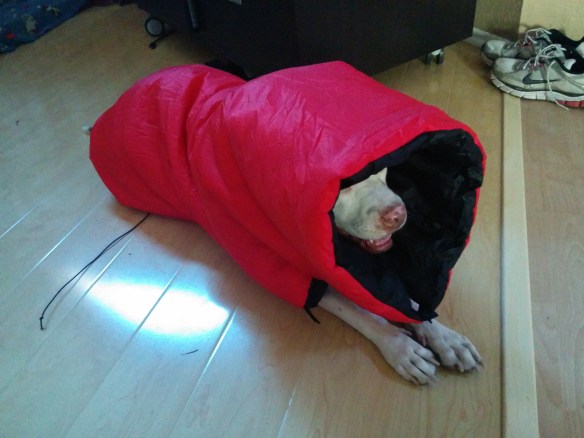 By far the best solution was a child size quilt with snaps on the back. We purchased a used Enlightened Equipment Protege quilt. The Protege quilt was designed as a child’s size quilt, but is perfectly suited for a dog her size. The snaps allow Dakota to walk around freely with the quilt on in the morning, move around the tent as she pleases, and stays securely strapped to her.

 Hike Now, Work Later