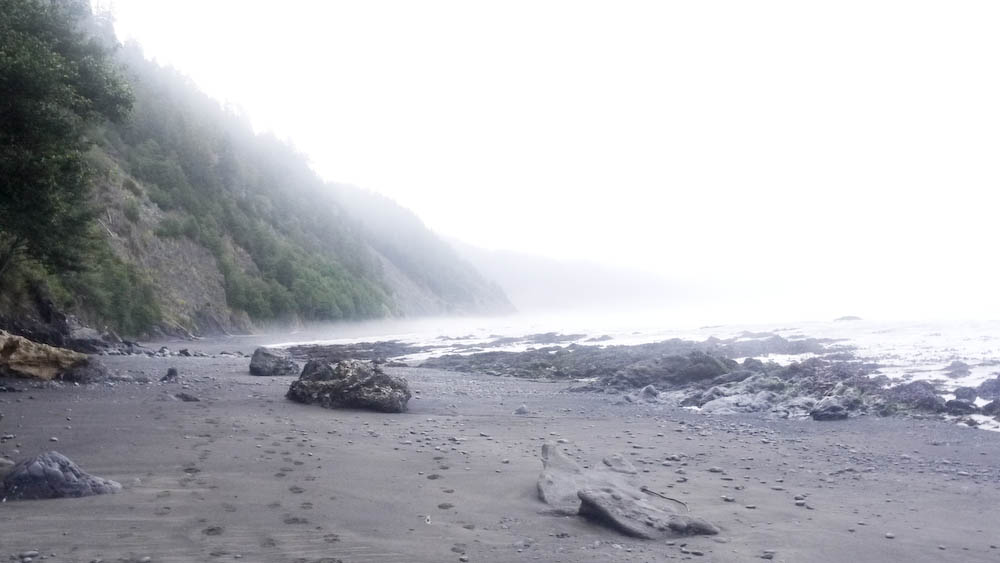
Overview of the Lost Coast Trail, California

P1080196

UPDATED October 26, 2016

Over the next month, we will be reporting on our trip through the Lost Coast.  The posts will include our daily trip diaries, food preparation, and current conditions and tips.  We plan to revisit and update the posts as we think of new ideas and new resources.

The Lost Coast trail is located in Northern California in Humboldt County. The shoreline at the southern end of the trail is so seismically unstable, the Pacific Coast Highway (Hwy 1) had to be moved miles inland.  Out of all the trekking trips on our to do list, the Lost Coast trail has long been on the top of the list. Being Californians, we felt this was a classic trail we had to tackle.

The 11 hour drive from Orange County has always been the main deterrent for us. However, due to the high number of fires in the Sierras, we had to cancel our week-long section hike of the John Muir Trail (JMT) and immediately jumped into planning the Lost Coast Trail after we heard a rumor about a potential quota restriction next year (see Permits and Restrictions for more details).

The Quick and Dirty:
Location: 
Located in Humboldt County, California.  The Lost Coast is broken into two sections, the Kings Range Wilderness and the Sinkyone Wilderness State Park. The Kings Range Wilderness section, which is the most popular stretch of the Lost Coast Trail, is located at Mattole Beach to Black Sands Beach in Shelter Cove.
Distance: 25 miles on the north trail, one way. We hiked from the southern end to north and back (50 miles total). While flat, the trail was tough because of the rocky terrain and soft sand.
Best Time: Year round, the area gets around 100 inches of rain every year. 
Duration: About 3.5 days with early mornings and afternoon breaks to wait for low tide. 
Permits and Restrictions: Permits can be obtained at either Matthole Beach or Black Sands Beach trailhead until January 8, 2017. Beginning January 9, 2017, advanced backcountry permits will be required.  Click here for more details. Make sure to obtain a fire permit online or at the ranger’s office if you plan on using a stove for cooking. A bear canister is also required for this trail and available for rental at the local BLM office.  As of September 2015, The ranger stated their may be a quota implemented in 2016.  Dogs are allowed on the trail. We did not bring Dakota with us because we were concerned the coastal terrain would be too hard on her paws.

Continue reading

Backpacking Trip Planning Tips

While going on multi-day backpacking trips are a lot of fun, they actually take quite a bit of planning. We’ve found the quality of our backpacking trips dramatically increases as we do more planning and research of the terrain we will be traveling on. This post is a quick summary of what we generally do before leaving for a backpacking trip.

Decide a location and research about it. 

Depending on the duration of the trip, we have a general idea of the area we want to go. For a short one night weekend trip, we typically venture into nearby national forests such as Los Padres and San Bernardino national forest in Southern California. For longer trips, we generally drive to the Sierra Nevada mountains which are 4-5 hours east of the coast. Once a location has been decided,we utilize online blogs to pin down the trails we want to hike to. Online blogs are also a great resource to give us an idea of the terrain type, water availability and details of how to obtain a permit.

Obtaining an overnight permit

Once a trail has been decided, obtain a permit before doing any further planning! To protect the forest ecosystems, there are a set number of people allowed each day on a trail. With backpacking getting more and more popular, we have seen a dramatic increase of people in the back country making it more difficult to get last minute permits. Most of the back country trails require an overnight back country permit, depending on the area, permitting processes can be very different. For example, Inyo National Forest reservations can be made online on http://www.recreation.gov whereas San Bernardino National Forest reservations need to be faxed to the ranger’s station. The best resources for obtaining a back country permit is the official wilderness website itself.

Trip Planning

Once a permit has been obtained, it’s time to start the detailed trip planning. We use many of the resources online to help us choose a trail head but most of the times we like to customize the trails based on the season (water availability), our interest and ability. Below are a few of the resources we use to plan our trips in California

  1. Caltopo. This web page provides a very detailed topo map of California but you will have to manually draw out your hiking itinerary. Once your trail map is drawn, Caltopo calculates your trail distance and total elevation change of the selected trail. Pretty neat website to help us get a better understanding of the terrain.
  2. Online forums. Due to the on going drought and the natural Chaparral environment in Southern California, we often depend on recent forums to check on water availability on the trail. For San Bernardino Mountains, we use http://www.sgwa.org/ to check recent trail conditions and water availability.
  3. Back Country Topo Pro is a new phone app Louis recently bought for $11.99 for his Nexus 5. We are still testing this app out and will do a more detailed review on it later. This is an app that allows you to download the topo map on your phone prior to leaving for a trip, it’s meant to be a makeshift GPS. These maps include various states in the U.S and also a handful of international countries too.

Packing for the trip

Leaving for a trip the next day? Don’t put off your packing until the last minute! For short weekend trips, we have a very simple packing system and usually pack the day before. For longer trips we start prepping for the food days before. It’s important to plan out each item in your backpack to avoid carrying excess weight!

Water supplies: We always carry at least 1.5 L of water per person and 1L for Dakota on our trips. This is the minimum amount we carry even if there is an amply supply of water on the trail. When we first started backpacking, there have been times where we miscalculated our water consumption or were over confident on the water availability. Dehydration is a very serious matter and can happen quickly.

Last but not least, send a friend or a family member your itinerary. Let them know where you are going and when you are expected to be back. This way they know who and where to call for help in case of emergency.

Being in the back country is one of my favorite things to do in the world. However, it can quickly turn into a dangerous place if there is no proper planning.

Trail Report- Cassidy Arch at Capitol Reef National Park

The Quick and Dirty:
Location: Cassidy Arch in Capitol Reef National Park
Distance: 3.6 miles round trip
Terrain Type: Well marked trail within the National Park. Watch for trail markers towards the end of the arch as the beauty of the surrounding can be very distracting!
Difficulty:  Easy to moderate with some elevation gain
Best Time: Avoid summer as the trail is very exposed
Duration: Around 2-3 hours

P1070753

Cassidy Arch, if you look closely, Louis is sitting in the middle

Continue reading

Trail Report- Lick Wash Trail at the Grand Escalante Staircase National Monument

The Quick and Dirty:

Location: Grand Escalante Staircase National Monument
Distance: 8 miles round trip but we only did about 4 miles before losing light and turning back
Terrain Type: Slot Canyon, although the canyons are much wider than the Willis Creek canyons we hiked previously
Difficulty:  Easy during summer with long days.
Best Time: Year round
Special Conditions: Approximately 20 miles off-roading, 4WD and high clearance vehicle recommended during wet seasons, although we did this in our 2WD sedan when the road was in good condition
Duration: Around 4-5 hours, however we only hiked the first 2 miles

P1070670

Entry point of the Lick Wash Trail

Continue reading

Trail Report: Sequoia National Park/Mineral King – Timber Gap to Sawtooth Pass

The Quick and Dirty:
Location: Sequoia National Forest, Mineral King
Distance: 28-29 miles (we looked at 3 maps, all different mileage)
Terrain Type: Rolling, high, and long elevation climbs and descents
Difficulty:  Strenuous
Best Time: Late summer and early fall, the road is closed when there is snow fall   Special Conditions: Permit needed for over night camping. Windy and difficult road to reach the last 20 miles to the trailhead. Aggressive marmots in the spring and early summer.  Bear canisters required.

Duration: 4 days

Every labor day we try to hit the trails.  This labor day, and to celebrate our one year anniversary, we spent it backpacking one of our favorite locations in California.

Continue reading